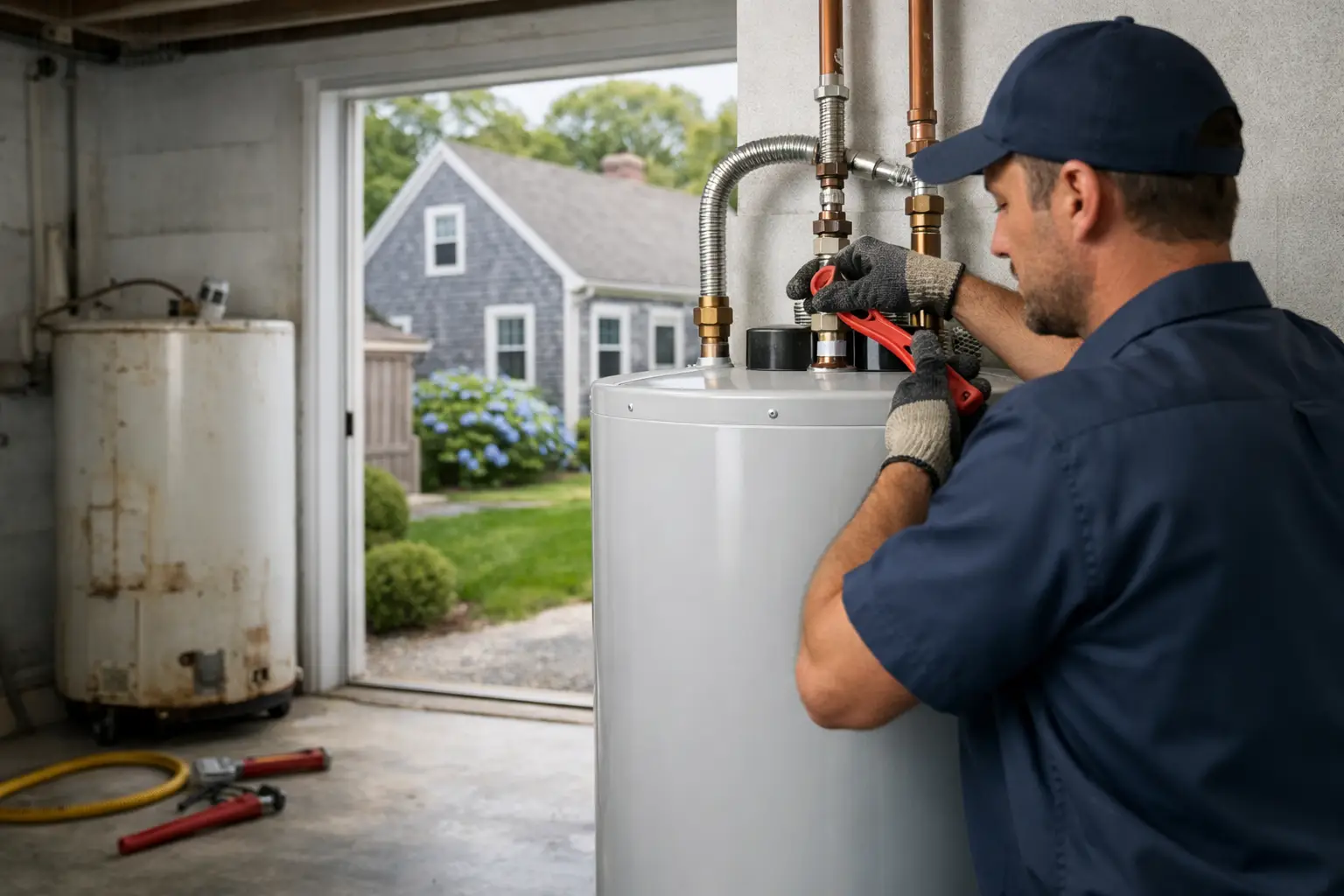
A cold shower is frustrating. A leaking water heater in a finished basement, utility room, or rental property is a much bigger problem. For water heater replacement in Brewster, MA, the best time to make a plan is usually before a small warning sign becomes a flooded floor, water damage, or a complete loss of hot water.
Cape Cod homes place different demands on water-heating equipment. Seasonal occupancy, older plumbing systems, hard-working laundry rooms, and limited mechanical-room space can all affect the right replacement choice. The goal is not simply to install a new unit. It is to select a properly sized, code-compliant system that gives your household or business dependable hot water without creating unnecessary operating costs.
Signs Your Water Heater Is Nearing Replacement
Most conventional tank water heaters last roughly 8 to 12 years, though maintenance, water quality, usage, and installation conditions all make a difference. If you do not know the unit's age, look at the serial number on the manufacturer's label. It often includes the manufacture date.
Age alone does not mean a heater must be replaced today. But an older unit deserves attention when it starts showing signs of trouble. Rust-colored hot water, rumbling or popping sounds, inconsistent temperature, slow recovery after showers, or moisture around the base of the tank all warrant a professional inspection.
A leak from the tank itself is especially serious. Connections, valves, and supply lines can sometimes be repaired. Once the tank has corroded through, however, replacement is generally the practical solution. Do not ignore a small puddle because it can become a larger leak without much warning.
For gas water heaters, call for service right away if you smell gas, notice soot, see an unusual burner flame, or have concerns about venting. If there is an active leak or no hot water during an urgent situation, fast service matters. Protect the area, shut off water if it is safe to do so, and contact a licensed professional.
Choosing the Right Water Heater for Your Property
The best replacement depends on how many people use hot water, when they use it, the energy source already serving the property, available space, and your budget. A technician should evaluate the installation site rather than recommending a unit based only on the size of the old tank.
Conventional Tank Water Heaters
A storage-tank water heater remains a smart choice for many Brewster homes. It provides a familiar setup, has a lower upfront cost than some alternatives, and can be a straightforward replacement when the existing plumbing, venting, and fuel source are in good condition.
Tank size matters. A household with two people may have very different needs than a family running back-to-back showers, a dishwasher, and laundry on the same morning. Installing too small a tank leads to frequent hot-water shortages. Installing a much larger unit than necessary can mean paying to heat water you do not use.
Tankless Water Heaters
Tankless water heaters heat water as it flows through the unit instead of storing it in a tank. They can be an excellent fit for homes that want long-term efficiency, need to recover space, or have a high demand for continuous hot water.
The trade-off is that tankless installation is more involved. Depending on the property, it may require gas-line upgrades, new venting, electrical work, condensate drainage, or changes to the water piping. A tankless unit must also be sized for the number of fixtures likely to run at once. A model that works well for one shower may not keep up if a second shower and washing machine start at the same time.
Heat Pump Water Heaters
Heat pump water heaters use electricity to move heat from the surrounding air into the water. They can offer significant energy savings and may qualify for Mass Save incentives when current program requirements are met. They are worth considering for homeowners focused on lowering long-term utility costs.
These systems work best when there is enough room around the unit and adequate air volume in the installation area. They also cool and dehumidify the surrounding space, which can be helpful in some basements but less desirable in a small enclosed room. A qualified installer can help determine whether the location and electrical setup support this option.
What a Proper Replacement Should Include
Water heater installation is more than setting a new appliance in place. Safe, reliable work includes checking the water connections, shutoff valves, drain pan where appropriate, temperature and pressure relief valve, discharge piping, expansion tank needs, gas connections or electrical supply, and venting for fuel-burning equipment.
Local code requirements and manufacturer specifications matter. They protect occupants, help prevent leaks and pressure-related hazards, and support the equipment's expected performance. If an older installation has outdated components or unsafe venting, a replacement project is the right time to correct them.
At Durfee Plumbing & Heating, licensed technicians assess the full system, not just the failed part. That approach helps identify issues that could shorten the life of a new water heater or cause trouble after installation. Fully stocked trucks can also help keep replacement work moving when the problem cannot wait.
Plan for the Cost, Not Just the Equipment Price
The lowest equipment price is not always the lowest project cost. Installation expenses can vary based on the water heater type, capacity, fuel source, venting requirements, access to the mechanical area, code upgrades, and whether old piping or valves need attention.
A clear estimate should explain what is included, what conditions could affect the scope, and which options are available. For a homeowner replacing a failed unit unexpectedly, financing may make it easier to choose a dependable system without delaying necessary work.
It also pays to think beyond the first invoice. A standard tank may cost less upfront, while a heat pump or tankless unit may reduce energy use over time. The right balance depends on how long you expect to own the property, your household's hot-water habits, and the condition of your current utility connections.
Avoid These Replacement Mistakes
Waiting for total failure is the most common mistake, particularly with an older tank installed over finished flooring or near stored belongings. If the water heater is approaching the end of its expected life, schedule an evaluation before it becomes an emergency.
Another mistake is replacing a unit with the exact same size without reviewing changes in household use. A growing family, a new soaking tub, added bathrooms, or a short-term rental schedule can all change hot-water demand. On the other hand, an oversized system wastes space and energy.
Do not overlook maintenance after installation. Flushing a tank when recommended, testing safety components as directed, keeping the area around the unit clear, and scheduling service when performance changes can help protect your investment. Tankless systems also need periodic maintenance, especially where mineral buildup is a concern.
When to Call for Water Heater Service in Brewster
Call promptly if your water heater is leaking, producing discolored water, making loud new noises, failing to deliver enough hot water, or showing signs of a gas or venting issue. A professional can determine whether repair is sensible or whether replacement will be the more reliable and cost-effective path.
For planned water heater replacement in Brewster, MA, scheduling an assessment before your current unit fails gives you time to compare tank, tankless, and heat pump options without the pressure of an emergency. A dependable hot-water system starts with an informed decision and workmanship built to last.