A furnace problem usually does not start with a total shutdown. More often, it starts with a house that feels a little colder than usual, a utility bill that jumps for no clear reason, or a noise you have not heard before. Knowing the signs your furnace needs repair can help you catch a small issue before it turns into a no-heat emergency.
For homeowners and property managers, that matters even more during a Cape Cod cold snap. A furnace that is struggling can put comfort, safety, and even pipes at risk if indoor temperatures drop too far. The good news is that most systems give you warning signs before they fail completely.
10 signs your furnace needs repair
Some furnace issues are obvious. Others are easy to overlook until the system gets worse. If you notice one of these problems, it is worth having the unit checked by a licensed heating professional.
1. Your furnace is blowing cool or lukewarm air
If the thermostat is set correctly and the furnace is running but the air coming from the vents is not warm enough, something is off. The problem could be as simple as a dirty filter restricting airflow, or it could point to issues with the burners, flame sensor, ignition system, or blower components.
Sometimes homeowners assume the system just needs more time to warm the house. That can happen on very cold days, but steady cool air is different. If the furnace is running without delivering proper heat, it should be inspected.
2. The airflow feels weak in multiple rooms
When a furnace is working properly, you should feel consistent airflow from room to room. Weak airflow can mean a clogged filter, a failing blower motor, duct issues, or buildup affecting system performance.
This is one of those problems that can get expensive if ignored. A blower motor that is straining to push air through the system may wear down faster, and poor airflow can make the furnace run longer than necessary, which drives up energy use.
3. You hear banging, squealing, rattling, or grinding
A furnace should make some normal operating sounds, but it should not sound rough. Banging can suggest ignition delays. Squealing may point to a worn belt or motor bearing issue. Rattling can mean loose panels or internal components. Grinding is usually a sign you should shut the system down and call for service quickly.
Noise does not always mean a major repair, but it almost always means something has changed. Catching that change early often keeps a minor mechanical problem from becoming a much bigger one.
4. Your heating bills are climbing without a clear reason
A sudden increase in heating costs is one of the most common signs your furnace needs repair, especially if your usage habits have not changed. When parts begin to wear out or airflow is restricted, the furnace has to work harder and run longer to maintain the same temperature.
There is some seasonal variation, of course. A colder month will usually cost more. But if your bill spikes and your home still does not feel as comfortable, the furnace may be losing efficiency because of a repair issue rather than weather alone.
5. The system turns on and off too often
Frequent cycling is another warning sign. A furnace should run in normal heating cycles, not constantly start and stop every few minutes. This can happen because of thermostat issues, airflow restrictions, overheating, or internal component problems.
Short cycling puts extra wear on the system. It also makes comfort harder to maintain because the house never reaches a steady temperature. If this has been happening for more than a day or two, it is smart to have it checked before repeated cycling causes additional damage.
6. Some rooms are warm and others stay cold
Uneven heating can have more than one cause, so this is a good example of an it-depends issue. In some homes, duct layout and insulation affect room temperatures. But if the imbalance is new or getting worse, the furnace itself may be part of the problem.
Weak blower performance, a clogged filter, duct leaks, or a system that is no longer heating effectively can all create hot and cold spots. If you have rooms that never seem to catch up, the problem is worth diagnosing instead of simply raising the thermostat.
7. The thermostat and furnace do not seem to agree
If you set the thermostat to 70 but the home feels much colder, the issue may not be the thermostat alone. Sometimes the thermostat is failing or poorly calibrated. In other cases, the furnace is not responding correctly to the thermostat's signal, or the heating cycle is not completing as it should.
This is where guessing can waste time and money. Replacing a thermostat will not solve the problem if the real issue is with the furnace control board, ignition sequence, or blower operation.
8. You notice unusual smells when the furnace runs
A brief dusty smell at the start of heating season can be normal. That is often just dust burning off after months of inactivity. What is not normal is a persistent burning smell, musty odor, or any smell that suggests something electrical, overheated, or gas-related.
If you ever suspect a gas odor, leave the area and seek immediate professional help. For other recurring odors, shut the system off and have it inspected. Smells are easy to dismiss, but they can point to overheating parts, wiring problems, or combustion issues that should not wait.
9. The pilot light or burner flame looks wrong
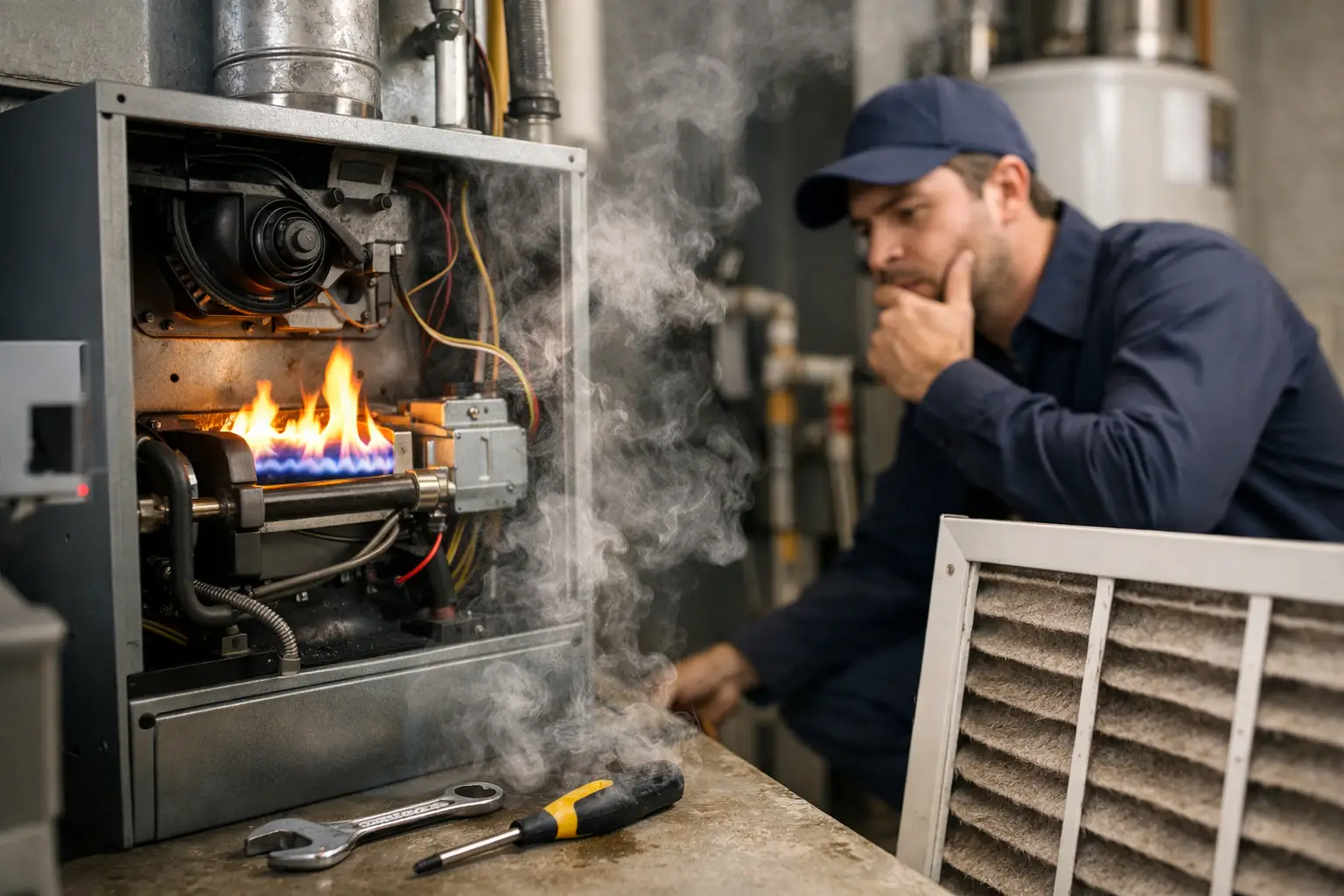
On older systems with pilot lights, an inconsistent flame can be a warning sign. On newer systems, burner flame behavior still matters. A healthy gas furnace flame is typically blue. If the flame appears yellow, flickers excessively, or the burners do not ignite cleanly, the system may have a combustion or ventilation problem.
This is not a DIY area. Combustion issues can affect both performance and safety, so they should always be handled by a qualified technician.
10. Your furnace is older and needs more frequent service
Age by itself does not automatically mean repair is urgent, but older furnaces tend to show patterns before failure. If your system is 15 to 20 years old, needs repeated repairs, or struggles to keep up in colder weather, it may be reaching the point where repair decisions need closer attention.
Sometimes a targeted repair still makes sense, especially if the issue is isolated and the rest of the unit is in solid condition. Other times, frequent breakdowns, declining efficiency, and rising repair costs start to make replacement the more practical move. A professional assessment can help you compare those options clearly.
When furnace repair should not wait
Some issues can be scheduled during regular business hours. Others should be treated as urgent. If your furnace will not turn on, is blowing cold air in freezing weather, smells like gas, trips breakers, or makes loud mechanical noises, it is best not to wait.
That is especially true in older homes, vacant properties, and commercial buildings where heat loss can create bigger problems fast. In parts of Cape Cod and surrounding areas, winter weather can turn a heating delay into frozen pipes, tenant complaints, or business disruption in a hurry.
What to do before you call
There are a few simple checks that can rule out minor issues. Make sure the thermostat is set to heat and has working batteries if needed. Check the air filter and replace it if it is dirty. Confirm that the furnace switch is on and the breaker has not tripped. If you have supply vents closed in several rooms, open them.
If those basics do not solve the problem, avoid repeated resets or trial-and-error fixes. Furnaces involve gas, combustion, electricity, and venting. Trying to force the system to run can make the problem worse or create a safety hazard.
Why early repairs usually cost less
Many homeowners wait because the furnace is still working, just not working well. That is understandable, but partial performance is often the stage where repairs are most manageable. A worn part, dirty sensor, or airflow issue is easier to address before it leads to overheating, shutdowns, or damage to other components.
Fast diagnosis also helps protect efficiency. Even when a struggling furnace is still producing heat, it may be doing it at a much higher operating cost. Fixing the issue sooner can improve comfort, reduce strain on the system, and lower the chance of a more disruptive breakdown.
If your heat has been inconsistent, noisy, or more expensive than it should be, trust what your house is telling you. A furnace rarely gets better by being ignored, and getting it checked early can save you a colder, more stressful day later.