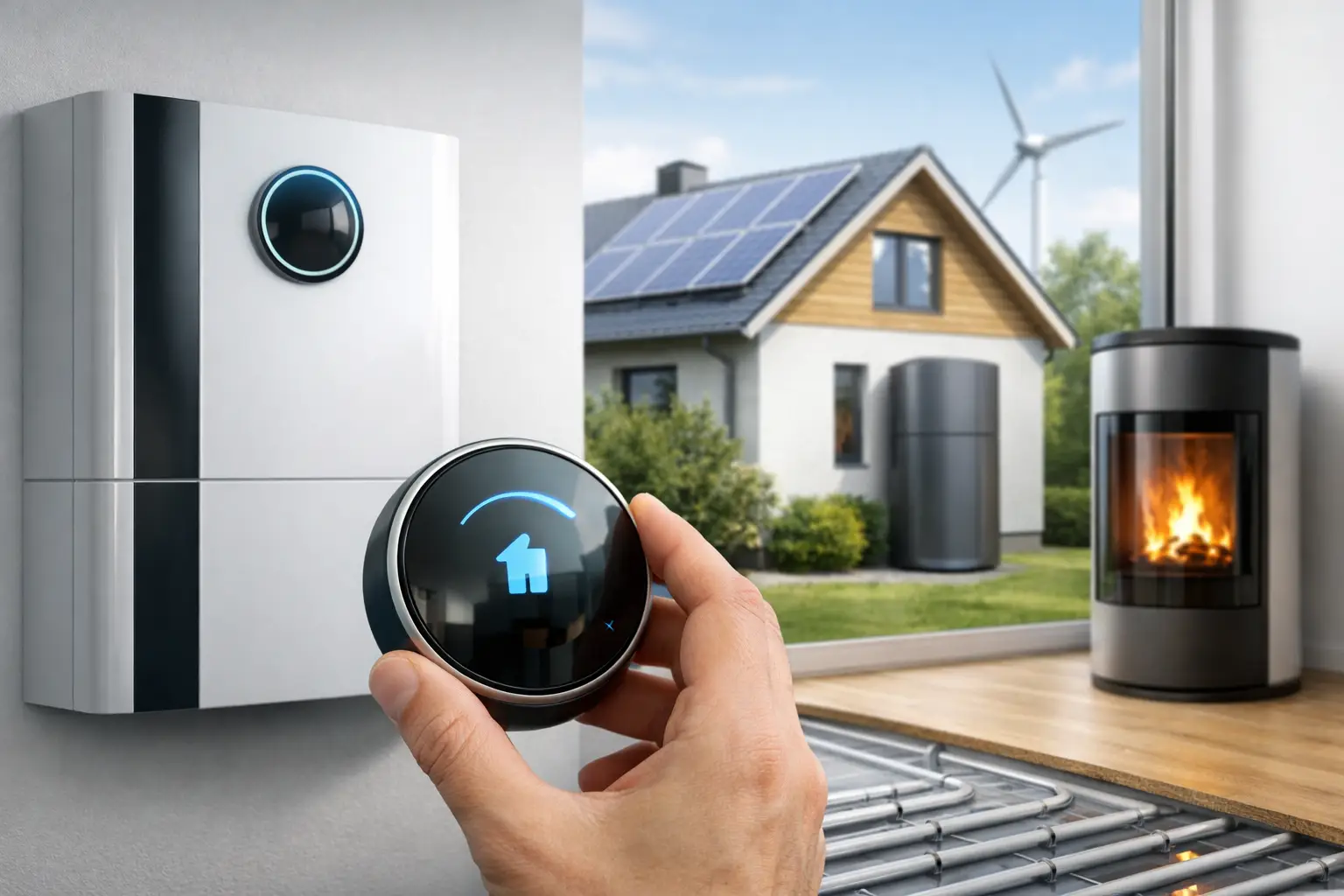
A heating system usually gets attention only when it stops working on a freezing January night. But if your boiler is aging, your furnace is cycling too often, or your energy bills keep climbing, the future of home heating systems stops being a trend and becomes a practical question: what should you install next, and what will still make sense 10 to 15 years from now?
For most property owners, the answer is not one perfect technology. It is a shift in how heating systems are designed, controlled, and combined. The homes that stay comfortable at a reasonable cost in the years ahead will usually rely on higher efficiency equipment, smarter controls, and systems sized for the building instead of a one-size-fits-all replacement.
What the future of home heating systems really looks like
The biggest change is not that every home will suddenly use the same equipment. It is that heating choices are becoming more flexible. Instead of replacing an old system with the exact same type, homeowners now have real options: cold-climate heat pumps, high-efficiency gas systems, hybrid setups, ductless mini splits, and water heating upgrades that reduce total energy use across the property.
That matters in places like Cape Cod, where weather, coastal conditions, home age, and fuel availability all affect what performs well. A newer home with solid insulation may be a strong candidate for a heat pump-based system. An older home with existing hydronic heat may benefit more from a strategic boiler upgrade and better controls. A multifamily or mixed-use property may need a phased approach that keeps tenants comfortable without forcing a full mechanical overhaul at once.
In other words, the future is less about replacing one heating standard with another and more about matching the right equipment to the right building.
Heat pumps will play a major role
If one technology is shaping the future of home heating systems more than any other, it is the heat pump. Heat pumps move heat rather than create it through combustion, which is why they can deliver efficient heating and cooling from one system.
For many homeowners, that dual-purpose benefit is a big reason they are moving up the list. Instead of maintaining separate equipment for summer and winter comfort, a heat pump can handle both. That can be especially attractive in homes already considering AC upgrades or in additions, finished basements, and rooms that never seem to stay comfortable.
Still, heat pumps are not magic. Their performance depends on proper sizing, installation quality, insulation levels, and the layout of the house. In some homes, a whole-home heat pump makes sense. In others, ductless mini splits are the better fit because they solve room-by-room comfort issues without requiring major ductwork changes.
There is also the cold-weather question, which many homeowners ask first. Modern cold-climate heat pumps are far better than older models, but the right setup still depends on the building envelope and the customer’s comfort expectations. Some homes do well with a heat pump as the primary source. Others are better served by a hybrid system that uses backup heat during the coldest stretches.
High-efficiency gas heat is not disappearing overnight
It is easy to talk about electrification as if every heating decision has already been made. In the field, it is more complicated than that. High-efficiency gas furnaces and boilers still make sense in many properties, especially where gas service is available, distribution systems are already in place, and a full electrical or mechanical conversion would be costly.
For homeowners with older forced-air furnaces or outdated boilers, upgrading to a high-efficiency model can still deliver meaningful improvements in comfort, reliability, and operating cost. Better combustion efficiency, variable-speed components, and improved controls all make newer systems perform differently than the equipment they replace.
That is why the future of home heating systems should not be framed as gas versus electric in every case. For some homes, the smartest move is a clean transition to a heat pump. For others, it is extending the life and value of existing infrastructure with a more efficient gas system while making smaller upgrades elsewhere, such as insulation, zoning, or smart thermostats.
Hybrid systems are a practical middle ground
One of the most realistic paths forward is the hybrid approach. A hybrid heating system combines an electric heat pump with a gas furnace or another backup heat source. The system can switch between modes based on outdoor temperature, energy cost, and performance.
This setup appeals to homeowners who want better efficiency and lower fuel use without giving up the familiar reassurance of backup heat during severe cold. It can also make sense for households that are not ready for a full conversion but do want to modernize in phases.
From a planning standpoint, hybrid systems reflect where the market is going. Property owners want options. They want efficiency, but they also want dependability. They want to reduce energy waste, but not at the expense of comfort during a winter storm or a tenant complaint in the middle of the night.
Smart controls will matter more than many people expect
Equipment gets most of the attention, but controls are becoming just as important. The heating system of the future is not only about the machine in the basement or outside the house. It is also about how the system responds to real conditions.
Smart thermostats, zoning controls, variable-speed blowers, and connected diagnostics can all improve comfort and efficiency when they are installed and configured correctly. Instead of running at full output all the time, many newer systems adjust in smaller increments to maintain steadier temperatures. That usually means fewer hot and cold swings, better humidity control, and less wasted energy.
For homeowners, the benefit is simple: the system works with more precision. For property managers and commercial clients, smarter controls can also support maintenance planning by catching issues earlier or identifying performance problems before they become full shutdowns.
Of course, technology only helps when it is matched with proper setup. A poorly configured smart thermostat will not fix undersized ductwork or an oversized boiler. The future is smarter, but it is not hands-off.
Home heating will be tied more closely to the whole house
The next generation of heating decisions will be less isolated. Contractors and homeowners are looking more closely at how heating interacts with insulation, air sealing, duct condition, water heating, and ventilation.
That is a good shift because many comfort complaints are not caused by the heating appliance alone. Drafts, leaky ducts, poor airflow, and inconsistent room temperatures often point to a house-wide issue. Replacing the furnace may help, but not as much as expected if the underlying problem is elsewhere.
This is also why rebates and efficiency programs can be valuable. When incentives help offset the cost of better equipment or system improvements, homeowners can make decisions based on long-term value rather than only upfront price. A company like Durfee Plumbing & Heating LLC often sees this firsthand: customers are not just asking what is cheapest today. They are asking what will hold up, what will save money over time, and what can be financed without creating new headaches.
What homeowners should do before replacing a system
If your heating system is nearing the end of its life, the best next step is not to chase a headline or pick the newest equipment on the market. Start with the basics. Look at the age of the system, recent repair history, fuel source, existing ductwork or piping, and whether the house has comfort issues in specific rooms.
Then think about your timeline. If you plan to stay in the home for years, efficiency and long-term operating cost matter more. If this is a rental or a commercial property, serviceability, reliability, and ease of maintenance may carry more weight. If your current system still runs but struggles, it may be worth evaluating whether targeted upgrades can buy time before a full replacement.
The right heating decision is usually the one that fits the building, the budget, and the way the space is used. That may mean a heat pump. It may mean a high-efficiency boiler. It may mean a hybrid system with better controls. The key is getting a real assessment, not a generic answer.
Where the market is headed next
Over the next several years, expect more homes to adopt heat pumps, more replacements to include smart controls, and more heating projects to be planned alongside cooling and water heating upgrades. Expect efficiency standards to keep influencing equipment choices. And expect homeowners to ask tougher questions about energy costs, backup heat, indoor comfort, and available rebates.
What probably will not change is the need for dependable installation and service. Even the most advanced equipment will not perform well if it is poorly sized, rushed into place, or left without maintenance. The future of home heating systems is more efficient and more flexible, but it still depends on solid workmanship and clear guidance.
If your current system is aging, noisy, expensive to run, or struggling to keep up, now is a good time to look ahead instead of waiting for an emergency call in the dead of winter. The best upgrade is rarely the flashiest one. It is the system that keeps your home comfortable, your operating costs predictable, and your next winter a lot less stressful.