A backed-up restroom at 9 a.m. can turn into a tenant complaint, a staff disruption, and a lost business day before lunch. That is why a commercial plumbing maintenance plan is not just a line item in your budget. It is a way to reduce surprises, protect your building, and keep daily operations moving.
For property managers, business owners, and facility teams, plumbing problems rarely stay small. A slow drain can point to grease buildup, root intrusion, or a damaged line. A minor leak under a sink can become cabinet damage, mold risk, and a repair that now involves more than one trade. Planned maintenance gives you a chance to catch those issues early, when they are cheaper and easier to fix.
What a commercial plumbing maintenance plan should do
A good plan is built around prevention, not just emergency response. The goal is to inspect the parts of your plumbing system that fail most often, test critical equipment, clean what needs cleaning, and spot wear before it affects your tenants, customers, or employees.
That sounds simple, but the right scope depends on the building. A restaurant has very different plumbing risks than a small office. A mixed-use property with older piping may need closer watch on leaks, shut-off valves, and drain lines. A medical office may care more about water quality, fixture reliability, and uninterrupted restroom access. The best plan matches the building instead of forcing every property into the same checklist.
What is usually included in a commercial plumbing maintenance plan?
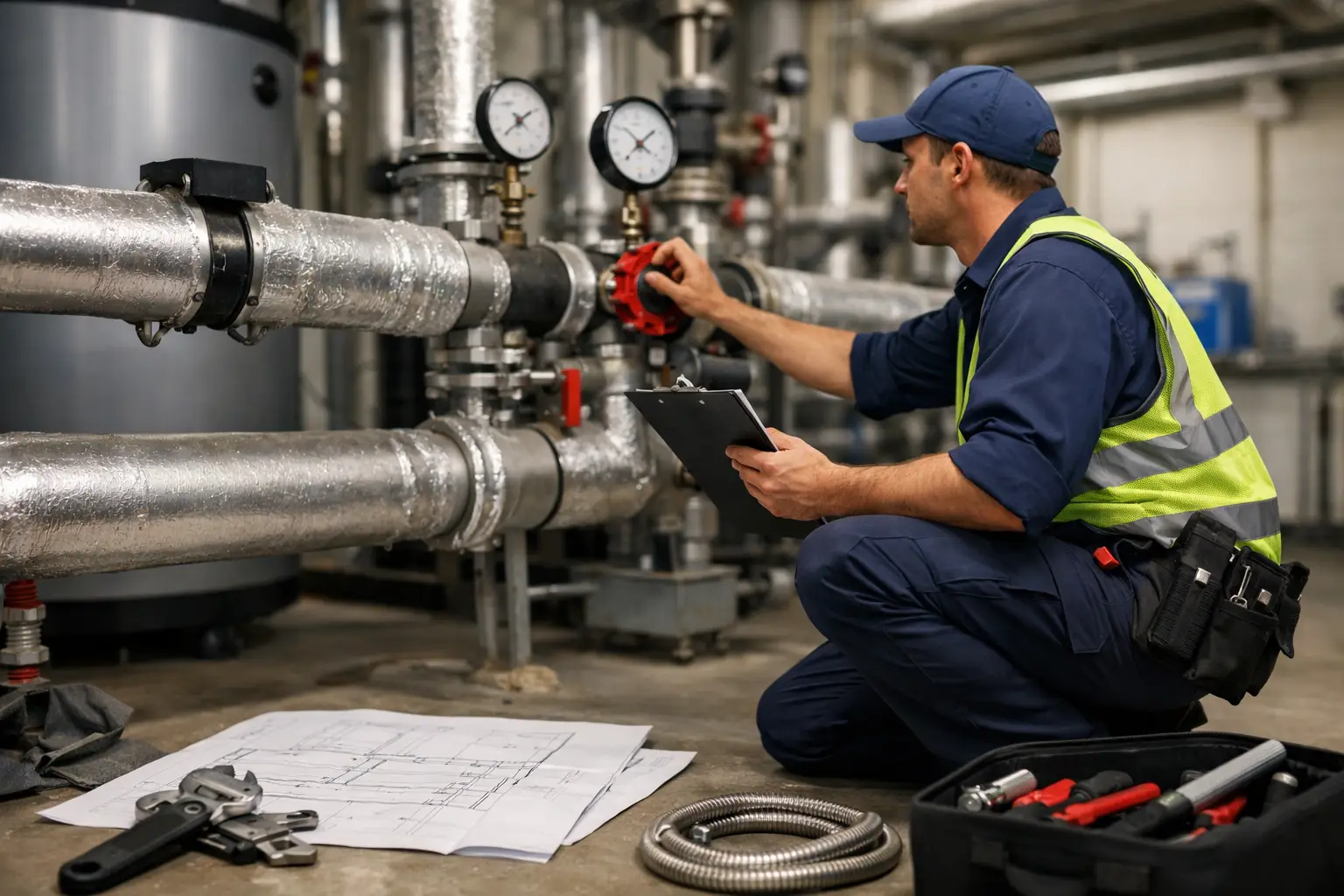
Most commercial plumbing maintenance plans include routine inspection and service for the systems that cause the most downtime. That often means toilets and urinals, faucets, flush valves, drains, water heaters, shut-off valves, exposed supply lines, hose bibbs, and any specialty fixtures tied to the way the business operates.
Drain maintenance is a major part of the picture. In many commercial buildings, repeated clogs are not random. They come from predictable buildup over time, whether that is grease, soap, paper products, scale, or sediment. Regular drain cleaning or camera inspection can help confirm whether the issue is basic maintenance or a larger pipe problem.
Leak detection matters just as much. Some leaks are obvious, but many are not. Small drips above ceiling tiles, at water heater connections, behind restroom walls, or around utility sinks can go unnoticed until damage spreads. During scheduled maintenance, technicians can inspect high-risk areas and look for early warning signs like corrosion, staining, pressure issues, or failing seals.
Water heaters and hot water delivery equipment also belong in the plan. In commercial settings, hot water interruptions affect sanitation, comfort, and in some cases code compliance. Maintenance may include checking temperature settings, flushing sediment, testing relief valves, reviewing venting where applicable, and inspecting for wear that could shorten the equipment's life.
Why preventive service usually costs less than reactive repairs
Most owners do not question the value of maintenance after a major plumbing failure. The harder part is seeing the savings before that failure happens. Preventive service rarely feels urgent on a quiet day. But emergency calls, water damage, cleanup costs, business interruption, and after-hours repairs add up fast.
There is also the issue of timing. When a system fails unexpectedly, you are making decisions under pressure. You may need to approve immediate repairs because the building cannot function without them. A maintenance plan gives you better control. You can schedule work before peak business hours, budget for replacements, and deal with aging components in a more organized way.
That does not mean every issue can be prevented. Pipes still age. Parts still fail. Freeze events, misuse, and hidden defects still happen. But routine service reduces the number of avoidable emergencies, and that can make a real difference for occupied buildings.
The right maintenance schedule depends on the property
Frequency is where many maintenance plans go wrong. If inspections are too infrequent, small problems slip through. If service is too aggressive, you may be paying for visits that do not match your actual risk level.
High-use properties generally need more attention. Restaurants, schools, retail centers, and facilities with public restrooms often benefit from more frequent drain work and fixture checks. Office buildings with stable occupancy may need a lighter schedule. Seasonal properties on Cape Cod can have another layer of risk, especially when winterization, spring startup, or occupancy changes affect plumbing performance.
Age matters too. Older buildings often have more valve failures, hidden corrosion, and inconsistent water pressure from legacy piping. Newer properties may have fewer repairs at first, but they still benefit from scheduled inspections that document system condition and catch installation issues before warranties expire.
What to ask before you sign up for a plan
A maintenance plan should be clear about what is included, what is not, and how service is handled when a problem is found. That matters more than a low monthly number.
First, ask how the building will be evaluated. A real commercial plan should start with the property itself, not a generic package. The provider should consider fixture count, business type, occupancy level, equipment age, and any history of recurring clogs, leaks, or hot water issues.
Next, ask what happens between scheduled visits. If your plan only covers inspections but leaves you waiting days for repair service, that may not be enough for an active facility. Response time matters, especially for commercial clients that cannot afford restroom shutdowns, water damage, or tenant complaints.
It is also worth asking whether the company documents findings clearly. Service notes, photos when needed, and repair recommendations help owners and managers make better decisions. Good reporting turns maintenance into a useful record instead of just another invoice.
Common mistakes building owners make
One common mistake is focusing only on the visible fixtures. A leaking faucet gets attention because people see it. A failing shut-off valve, a scaling water heater, or a partially blocked line in a utility area may go ignored until it becomes urgent. The plumbing system works as a whole, and maintenance needs to reflect that.
Another mistake is waiting for repeat problems before acting. If the same restroom clogs every month, that is not normal wear and tear. It is a sign that the underlying issue has not been addressed. A maintenance plan should reduce repeat calls, not normalize them.
Some properties also treat plumbing and heating or mechanical systems as totally separate decisions. In reality, they often overlap. Water heaters, boiler-related piping, condensate drainage, and utility room access can affect more than one system. Working with a contractor that understands the full building can make planning easier and reduce finger-pointing when problems cross trades.
When a plan needs to be customized
Not every commercial plumbing maintenance plan should look the same. Multi-tenant buildings may need service structured around tenant communication and access windows. Restaurants may need grease-related drain maintenance on a tighter cycle. Facilities with older water heaters or hard water issues may need more frequent flushing and inspection. Buildings that sit vacant part of the year may need seasonal startup and shutdown service.
This is where local experience helps. In coastal areas, salt air, seasonal occupancy, and weather swings can put extra strain on plumbing components. A contractor familiar with commercial properties in Cape Cod is more likely to anticipate those conditions and build a schedule that fits how the property is actually used.
Choosing a provider you can count on
The plan itself matters, but so does the team behind it. Commercial clients need licensed technicians, clear communication, and service that does not drag on for days while a building waits. A provider with stocked trucks, broad plumbing experience, and true 24/7 availability can make maintenance more useful because the same company can often handle the repair when something is found.
That continuity matters. It saves time, reduces confusion, and helps build a clearer history of the property. For many businesses and managers, that is the real value of an ongoing service relationship. You are not starting from scratch every time there is a leak, clog, or equipment concern.
Durfee Plumbing & Heating works with commercial clients who need that kind of dependable support - scheduled maintenance when things are calm, and fast response when they are not.
A plumbing system does not need to fail dramatically to cost you money. Sometimes it just wears down your schedule one service call at a time. The right maintenance plan helps you stay ahead of that, with fewer disruptions and more control over what happens next.