A cold shower is often the first warning, but it is rarely the only one. If you are searching for “water heater replacement Barnstable MA” after finding a puddle near the tank, hearing rumbling noises, or running out of hot water too quickly, it is time to look beyond a temporary fix. A failing water heater can damage finished space, interrupt a business, and leave a household without a basic daily necessity.
The right replacement is not simply the largest unit that will fit in the same corner. Your home’s fuel source, hot-water demand, available space, venting, electrical capacity, and efficiency goals all matter. A licensed local professional can help you make a practical decision before a small issue becomes a major leak.
When Water Heater Replacement Makes More Sense Than Repair
Some water heater problems are repairable. A failed heating element, thermostat, pressure-relief valve, or pilot assembly may be corrected without replacing the entire unit. If the tank is relatively new and in otherwise good condition, a repair can be the sensible, lower-cost choice.
Tank failure is different. Water coming from the body of the tank, rusty water that does not clear, or visible corrosion around the tank’s base can point to internal deterioration. Once the tank itself is leaking, replacement is usually the safe answer. The inner steel tank cannot be reliably repaired.
Age is another important factor. Traditional tank-style water heaters often provide many years of service, but performance, water quality, maintenance history, and installation conditions all affect their lifespan. If your unit is older, needs repeated repairs, or no longer keeps up with normal demand, investing in a new system can offer more dependable hot water and fewer surprises.
Do not wait on an active leak. Shut off the water supply to the heater if you can do so safely, protect nearby belongings, and arrange service promptly. A slow leak can become a damaging one with very little warning.
Choosing a Water Heater for Your Barnstable Property
A water heater should fit the way the property is actually used. A year-round home with several bathrooms has different needs than a seasonal cottage, a rental property, or a commercial space with steady sink use. During a water heater replacement in Barnstable, MA, the best equipment choice depends on demand as much as it depends on the existing setup.
Standard Tank Water Heaters
A conventional storage-tank water heater remains a dependable option for many homes. It stores a set amount of hot water, is available in gas and electric models, and is generally familiar to service and maintain. Proper sizing is essential. A tank that is too small may leave the last person in the morning shower with lukewarm water. A unit that is unnecessarily large can raise upfront and operating costs.
For homeowners replacing a like-for-like system, a standard tank may be the most straightforward path. Still, newer models may have different venting, drain pan, expansion tank, or code requirements than the older heater they replace.
Tankless Water Heaters
Tankless water heaters heat water as it flows through the unit instead of keeping a full tank hot around the clock. They can be an excellent choice for properties that want a compact system, long equipment life, and a continuous supply of hot water within the unit’s capacity.
The trade-off is that tankless equipment must be sized for simultaneous use. Running multiple showers, a dishwasher, and a washing machine at the same time can exceed an undersized unit’s output, especially when incoming water is cold. Gas line capacity, venting, electrical requirements, and water treatment may also need attention. Tankless installation is not a simple swap, but the right installation can provide excellent performance.
Heat Pump Water Heaters
Heat pump water heaters use electricity to move heat from surrounding air into the water rather than generating all heat directly. This can significantly reduce water-heating energy use in the right setting. They are often worth considering for homeowners focused on efficiency and available incentives.
Because these systems need adequate surrounding air and produce cool, dry air, placement matters. A basement, utility room, or garage may work well, while a small enclosed closet may not. They also require planning for condensate drainage and electrical service. Mass Save rebates and other programs may help offset qualified upgrades, though eligibility and available amounts can change.
What a Professional Replacement Should Include
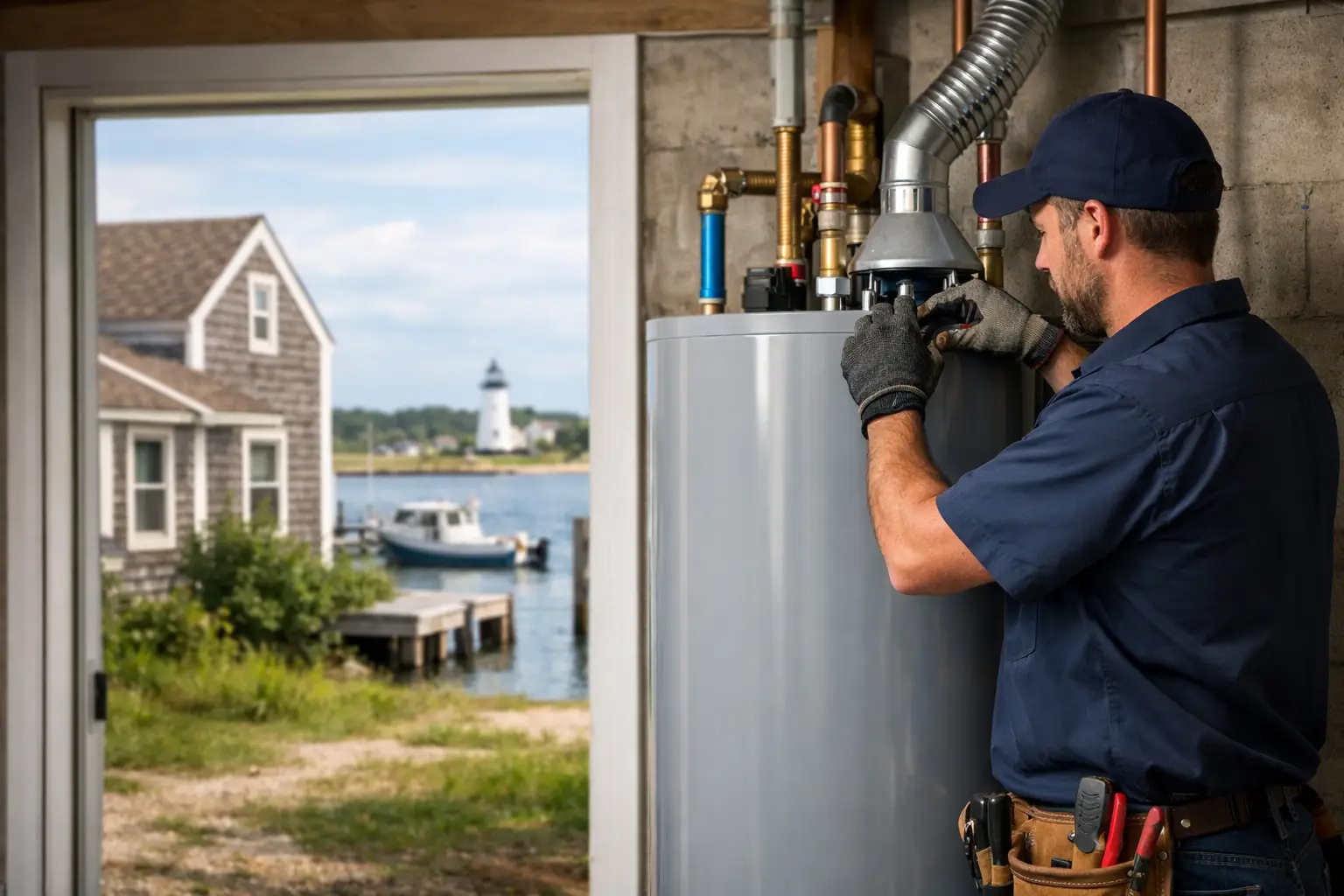
A proper water heater installation starts before the old unit is removed. A technician should assess the current equipment, identify the fuel type, verify capacity needs, and inspect the installation area. That evaluation helps prevent common problems such as inadequate venting, an undersized gas line, improper drainage, or a unit that cannot meet household demand.
The installation itself should account for required safety components, including shutoff valves, temperature and pressure relief protection, appropriate discharge piping, and a drain pan where needed. Gas-fired equipment requires correct venting and combustion considerations. Electric and heat pump systems require the appropriate electrical connections. Local permit and code requirements also need to be addressed.
This is where licensed workmanship matters. Replacing a water heater can involve plumbing, gas, electrical, venting, and safety systems at the same time. A qualified installer can identify whether a direct replacement is appropriate or whether the home needs supporting upgrades to protect performance and safety.
After installation, the unit should be tested for proper operation. You should know where the shutoff valve is, understand the basic manufacturer maintenance recommendations, and receive clear information about warranty coverage. Durfee Plumbing & Heating provides a 1-year parts and labor warranty, helping customers move forward with added confidence after a completed installation.
Avoiding Surprises Before Installation Day
A few details can make the replacement process faster and smoother. Clear a path to the mechanical area, remove stored items from around the old heater, and let the technician know about access challenges such as narrow stairs, crawlspaces, or finished basement areas. For rental or commercial properties, plan around tenant schedules and business operations when possible.
It also helps to share the symptoms you have noticed. Mention whether hot water runs out quickly, the pilot light has been unreliable, the breaker has tripped, or the tank has leaked. Photos of the existing water heater label can be useful when discussing options ahead of time.
Price should be considered in context. The least expensive replacement may not be the best value if it does not meet demand, creates higher utility costs, or requires another upgrade soon. Financing options can make a higher-efficiency or better-sized system more manageable, particularly when replacement cannot wait.
Get Ahead of the Next Failure
Water heaters tend to fail at inconvenient times: during a busy workweek, before guests arrive, or when a property is already dealing with another maintenance issue. Watching for warning signs and scheduling an evaluation early gives you more control over the equipment choice, installation timing, and budget.
If the tank is leaking, the hot water is unreliable, or the unit is nearing the end of its useful life, a prompt professional assessment can protect your property and restore dependable hot water without unnecessary delay.