A leak does not need to be dramatic to be expensive. Some of the costliest plumbing problems start behind a wall, under a floor, or in a crawl space where no one sees them for weeks. Knowing the best signs of hidden leaks can help you act before a small repair turns into water damage, mold growth, or structural trouble.
For homeowners and property managers, the challenge is that hidden leaks rarely announce themselves clearly. You might notice a higher water bill, a soft spot in the flooring, or a smell that never quite goes away. Each sign on its own may not prove a leak, but patterns matter. When several of these issues show up at once, it is time to take a closer look.
Why hidden leaks are easy to miss
Most plumbing is out of sight by design. Supply lines run through walls and ceilings, drain lines sit below fixtures, and water can travel far from the actual source before it becomes visible. That is why the wet stain on one side of a room may be caused by a pipe leak somewhere else entirely.
On Cape Cod, seasonal homes and weather swings can make this worse. A property that sits empty for stretches may develop a leak that goes unnoticed, and freeze-related pipe damage does not always show up right away. By the time someone returns and spots the evidence, the leak may have been active for quite a while.
1. A water bill that jumps without a clear reason
A sudden increase in your water bill is one of the best signs of hidden leaks, especially if your household habits have not changed. If the number of occupants is the same, irrigation use is steady, and no major appliance was added, extra water use usually points to a problem.
This is not always a dramatic spike. Sometimes the change is gradual, which makes it easier to ignore for a few billing cycles. Compare recent bills to the same season last year when possible. If usage keeps creeping up, a hidden leak is worth ruling out.
2. Musty odors that linger
A persistent damp or musty smell often shows up before visible water damage. When moisture gets trapped inside walls, under cabinets, or beneath flooring, it creates the kind of stale odor that cleaning alone will not fix.
Bathrooms, laundry rooms, utility spaces, and kitchens are common problem areas, but the smell can drift. If one room always seems off even after it has been cleaned and aired out, that is a sign moisture may be collecting where it should not. It does not always mean major mold growth, but it does mean something needs attention.
3. Stains on ceilings, walls, or trim
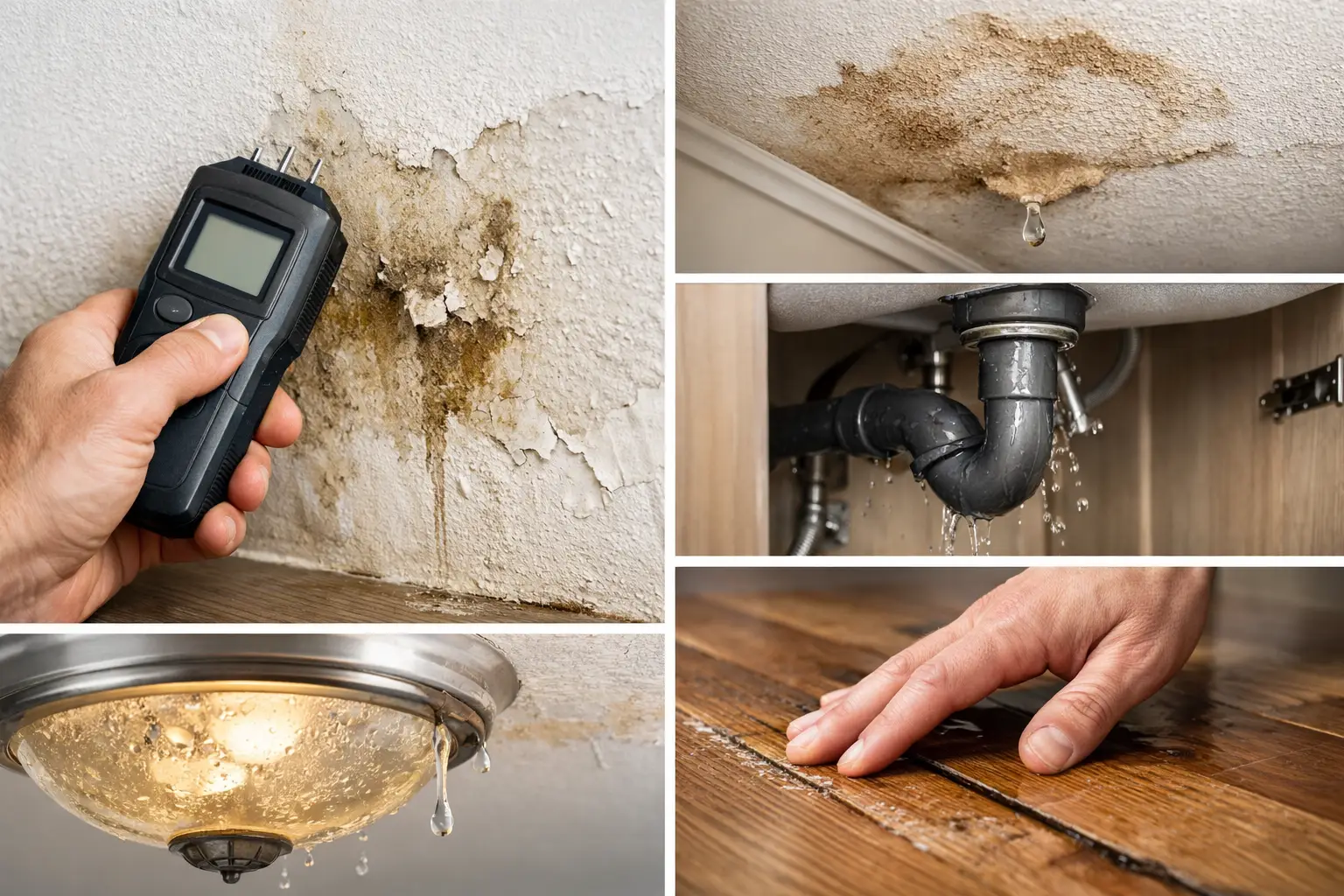
Discoloration is a classic warning sign, but it does not always look dramatic. Water stains may appear as yellow, brown, or copper-colored patches. Sometimes paint starts bubbling or drywall looks slightly swollen before a stain fully develops.
The key detail is change over time. A stain that grows, darkens, or returns after repainting usually means active moisture is still present. Even a small ring on a ceiling below a bathroom or near a plumbing line deserves attention, because water often spreads across framing before it becomes visible.
4. Flooring that feels soft, warped, or unusually warm
Leaks below floors can show up through texture before you ever see standing water. Wood may cup or buckle. Vinyl can lift at the edges. Tile may loosen if the subfloor beneath it is getting wet. In some cases, carpet feels damp for no obvious reason.
Warm spots on the floor can also point to a hidden hot water line leak, especially on slab foundations. That does not confirm the issue on its own, because sunlight and HVAC conditions can affect floor temperature too, but an isolated warm area that keeps returning is worth checking.
5. Reduced water pressure
Low water pressure can have several causes, including fixture buildup, valve issues, or municipal supply problems. But it can also happen when water is escaping from a pipe before it reaches the fixture properly.
What matters is whether the pressure change is isolated or widespread. If only one faucet is weak, the issue may be local. If multiple fixtures across the property suddenly lose pressure, especially with no city-wide notice, a hidden plumbing leak becomes more likely. This is one of those cases where it depends on the age of the system and the layout of the building, so proper diagnosis matters.
6. Sounds of running water when nothing is on
If you hear water moving through pipes after all fixtures and appliances are off, do not ignore it. A faint hiss behind a wall, a steady trickling sound, or a toilet that seems to refill too often can all point to water escaping somewhere.
Some homes have normal background noises from water treatment equipment or heating systems, so context matters. But if the sound is new, repeats regularly, or seems to come from a closed wall or floor cavity, it is smart to investigate. This is especially true at night when the house is quiet and small plumbing sounds become easier to notice.
7. Mold or mildew that keeps coming back
Surface mildew in a busy bathroom may just mean the room needs better ventilation. But mold that returns quickly after cleaning, or appears in places that should stay dry, is a different story.
Baseboards, the backs of cabinets, corners near tubs and showers, and walls adjacent to plumbing fixtures are all areas to watch. Hidden leaks feed mold with a constant moisture source. You can wipe the surface away, but if the leak remains, the problem will keep returning. That is why mold issues and plumbing issues often overlap.
8. Cracks in walls or unusual settling
This sign is less obvious, but long-term leaks can affect structural materials and even contribute to foundation movement. Water under slabs or around support areas can slowly shift soil conditions, while ongoing moisture inside walls can weaken drywall and wood framing.
Not every crack means a leak. Homes settle for many reasons, especially older properties. But when cracks appear along with high water bills, damp smells, or soft flooring, they should be looked at together rather than as separate problems.
9. Your water meter moves when no water is being used
This is one of the simplest ways to check for a hidden leak. Turn off faucets, appliances, ice makers, and anything else that uses water. Then look at the water meter. If the meter continues to move after everything is off, water may still be flowing somewhere in the system.
This test is useful, but it has limits. It will not tell you exactly where the leak is, and very slow leaks may be harder to detect right away. Still, for many property owners, it is the fastest first step before calling for professional leak detection.
What to do if you notice the best signs of hidden leaks
If you spot one of these issues, do not panic. Start by observing patterns. Note where the sign appears, when you noticed it, and whether it is getting worse. Check nearby fixtures, cabinets, ceilings, and utility areas for additional clues. If the problem involves active dripping, visible damage, or a fast-rising bill, move quickly.
When possible, shut off water to the affected fixture or to the building if the leak seems significant. That step alone can limit damage. After that, professional diagnosis is usually the right move. Hidden leaks often require more than a visual inspection, because the source may be behind finished surfaces or beneath the structure.
A licensed plumber can help separate plumbing leaks from look-alike issues such as condensation, roof intrusion, HVAC drainage problems, or humidity-related staining. That distinction matters. The wrong repair wastes time and money while the real issue continues to spread.
When fast service matters most
Some leaks can wait a day for scheduled service. Others should be treated as urgent. If water is actively damaging ceilings, walls, flooring, or electrical areas, or if a leak may have started after freezing weather, fast action is the safer call.
For second homes, rentals, and commercial spaces, hidden leaks can become expensive because no one is present to catch them early. That is one reason many local property owners in Cape Cod rely on responsive service when something seems off. A quick inspection can prevent a much larger repair later.
The most useful approach is simple: trust changes in your building. A smell that was not there before, a stain that keeps growing, or a bill that suddenly climbs is your property telling you something. Catching it early does not just protect pipes. It protects floors, walls, air quality, and the parts of your home or building that are much more costly to rebuild.
If you are seeing several of these warning signs at once, getting answers sooner is usually the cheaper path.