Running out of hot water halfway through a shower is frustrating. So is paying to keep 40 or 50 gallons heated around the clock when nobody is using it. If you are considering a Rinnai tankless water heater, the appeal is easy to understand - endless hot water, less standby energy loss, and a smaller footprint than a traditional tank.
That said, tankless is not automatically the right fit for every home or building. The better question is whether the system matches your water demand, fuel supply, venting setup, and budget. For homeowners and property managers, that is where the decision usually gets real.
What a Rinnai tankless water heater actually does
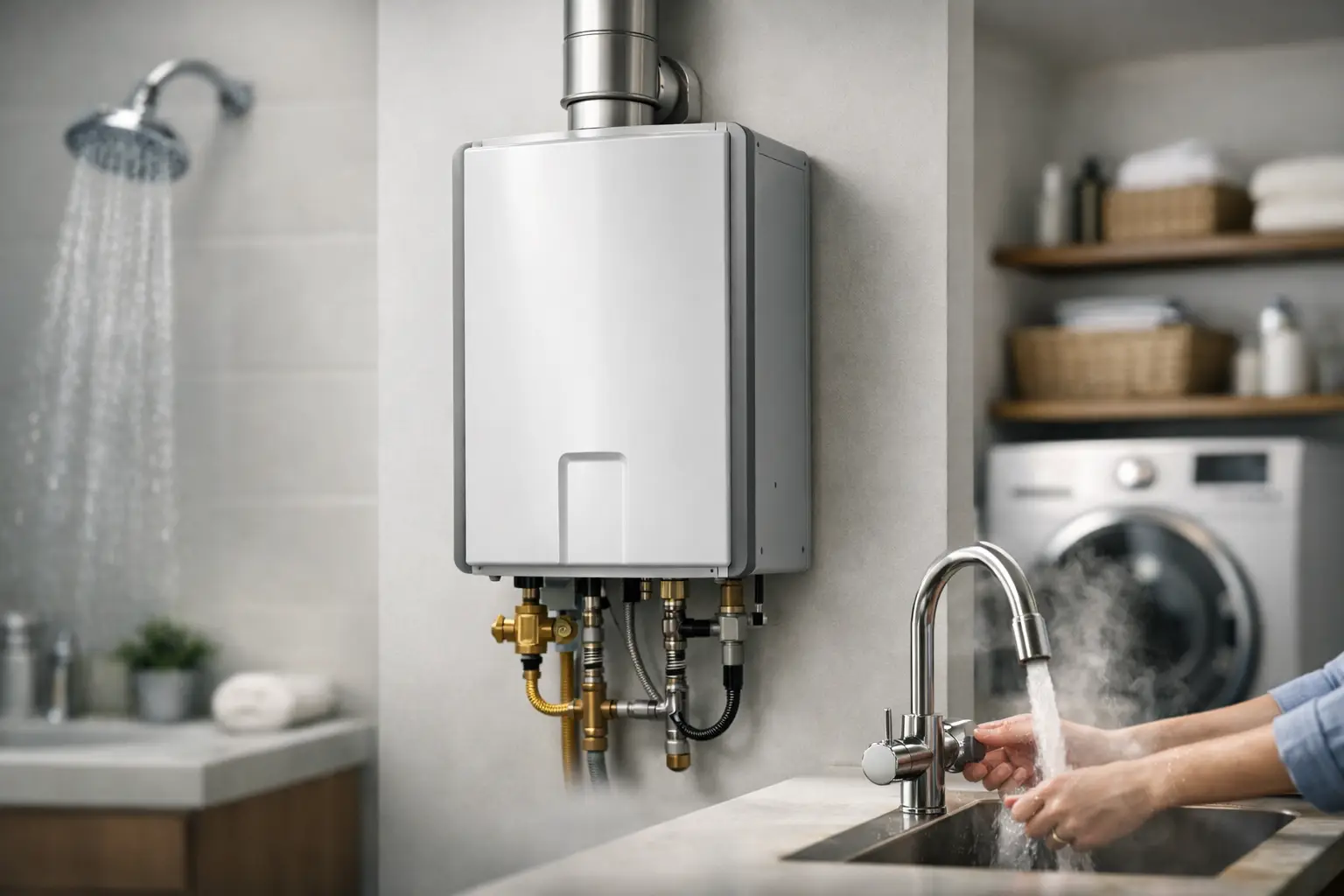
A tankless water heater heats water as it moves through the unit instead of storing it in a tank. When you turn on a hot water fixture, cold water enters the system, a gas burner or electric element activates, and the unit heats water on demand.
For many households, the biggest benefit is consistency. You are not limited by the size of a storage tank, so back-to-back showers are far less of a problem when the equipment is sized correctly. You also gain wall space, which matters in tight utility rooms, finished basements, condos, and smaller mechanical areas.
Rinnai is one of the better-known names in tankless equipment, especially on the gas side. People often search for a "Rinnai" tankless water heater when they mean Rinnai, and the broader point still stands - brand matters, but installation quality matters just as much. A high-end unit installed poorly will not perform like it should.
Why homeowners switch from a tank system
Most people do not start shopping for tankless because they want a new gadget. They do it because the current setup is showing its age, the family has outgrown the available hot water, or they want better efficiency.
A tankless system can make a lot of sense if your existing water heater is nearing failure and you would rather upgrade than replace like-for-like. It can also be a strong option if you are remodeling, adding bathrooms, or trying to reduce utility waste over time.
There is also the convenience factor. A properly sized gas tankless unit can keep up with repeated use much better than an undersized tank. That matters in homes with kids, guests, or seasonal occupancy patterns where hot water demand swings sharply.
The real benefits - and the trade-offs
The main selling point is endless hot water, but that benefit depends on flow rate and temperature rise. If multiple showers, a washing machine, and a dishwasher are all running at once, even a tankless unit has limits. It does not create infinite capacity. It creates continuous heating up to the unit's rated output.
Efficiency is another advantage. Since there is no stored tank of hot water losing heat all day, many homes see energy savings compared with older storage systems. Over time, that can help offset the higher upfront installation cost.
Service life is often longer than a standard tank too, especially when the system is maintained properly. In many cases, a tankless unit can outlast a conventional heater by several years.
The trade-offs are mostly upfront. Installation usually costs more than swapping one tank for another. Gas line upgrades may be needed. Venting may need to be changed. In some homes, the incoming water quality may make regular descaling especially important. If maintenance is ignored, performance and lifespan can suffer.
There is also a small delay factor. Tankless units heat water quickly, but you may still wait for hot water to travel through the pipes to the fixture. A tankless system does not eliminate plumbing distance.
Sizing matters more than brand
Flow rate and simultaneous use
The most common mistake with tankless water heaters is poor sizing. People focus on the logo on the cabinet and ignore how much hot water the home actually uses at one time.
A house with one bathroom and light daily use needs a very different setup than a larger property with three bathrooms, a soaking tub, laundry, and a busy morning schedule. If the unit is too small, the water may turn lukewarm when several fixtures run together. If it is oversized, you may spend more than necessary.
Temperature rise in colder months
Incoming groundwater temperature affects performance. In Massachusetts, winter incoming water is colder than it is in many southern states, so the unit has to work harder to reach the same output temperature. That matters when selecting equipment for Cape Cod homes, where seasonal conditions can influence demand and performance expectations.
This is why sizing should be based on real household usage and local conditions, not generic online estimates.
Installation details that can change the price
Installing a Rinnai tankless water heater is not always a simple swap
Some homes are straightforward. Others need meaningful upgrades before a tankless unit can be installed safely and effectively.
Gas-fired models may require a larger gas line because tankless systems often need more BTUs than a standard storage water heater. Venting may also need to be replaced with approved materials based on the unit and the layout of the home. Condensate drainage, electrical connections, combustion air, and code requirements all have to be addressed too.
If you are replacing an older atmospheric-vent tank heater, this can be a bigger project than expected. On the other hand, if the home already has favorable gas, venting, and utility access, the installation may be much more efficient.
That is why a real site evaluation matters. Price ranges found online can be useful for broad planning, but they do not tell you what your building actually needs.
Maintenance is part of the deal
Tankless water heaters are not maintenance-free. That is one of the most misunderstood parts of ownership.
In areas with mineral-heavy water, scale can build up inside the heat exchanger. Periodic flushing helps protect efficiency and prevent premature wear. Filters should also be checked and cleaned as needed, and the overall system should be inspected to catch small issues before they become service calls.
For property owners, this is usually a fair trade. You get better efficiency and long-term performance, but only if the unit is maintained. Skipping service to save money tends to cost more later.
Is tankless a good fit for older homes?
Often, yes - but it depends on the infrastructure. Many older homes can support a tankless installation, though some need updates to gas piping, venting, or water line layout.
This is especially relevant in older coastal housing stock, vacation properties, and buildings that have seen multiple additions over time. A professional evaluation can identify whether the system is a clean fit or whether another solution, such as a high-efficiency tank or hybrid setup, would be more practical.
There is no one-size-fits-all answer here. A good recommendation should reflect the building, not just the product category.
When a tankless unit may not be the best choice
A tankless system is not the best answer in every case. If the budget is very tight and the current priority is basic replacement, a standard tank may be the more practical move. If the property has limited gas capacity or difficult vent routing, the installation cost may outweigh the energy savings for years.
The same goes for buildings with relatively low hot water use. If demand is light and consistent, a traditional water heater can still be a reasonable solution.
Good service advice should include that possibility. The goal is not to force every customer into one technology. It is to match the right equipment to the job.
What to ask before you install one
Before moving forward, ask how many fixtures the unit can support at once under winter conditions. Ask whether your gas line needs upgrading, what maintenance is recommended, and whether a recirculation option makes sense for your layout.
You should also ask about warranty coverage, expected service life, and whether financing is available if the installation involves broader plumbing updates. Those answers tell you more than a brochure ever will.
For homeowners who want dependable hot water without a bulky tank, a properly installed tankless system can be a smart long-term upgrade. If you are weighing a Rinnai tankless water heater for your home or property, the best next step is not guessing on model numbers - it is getting a clear assessment of your demand, your utilities, and your installation options. That is how you end up with a system that works well on the coldest morning, not just one that looks good on paper.