
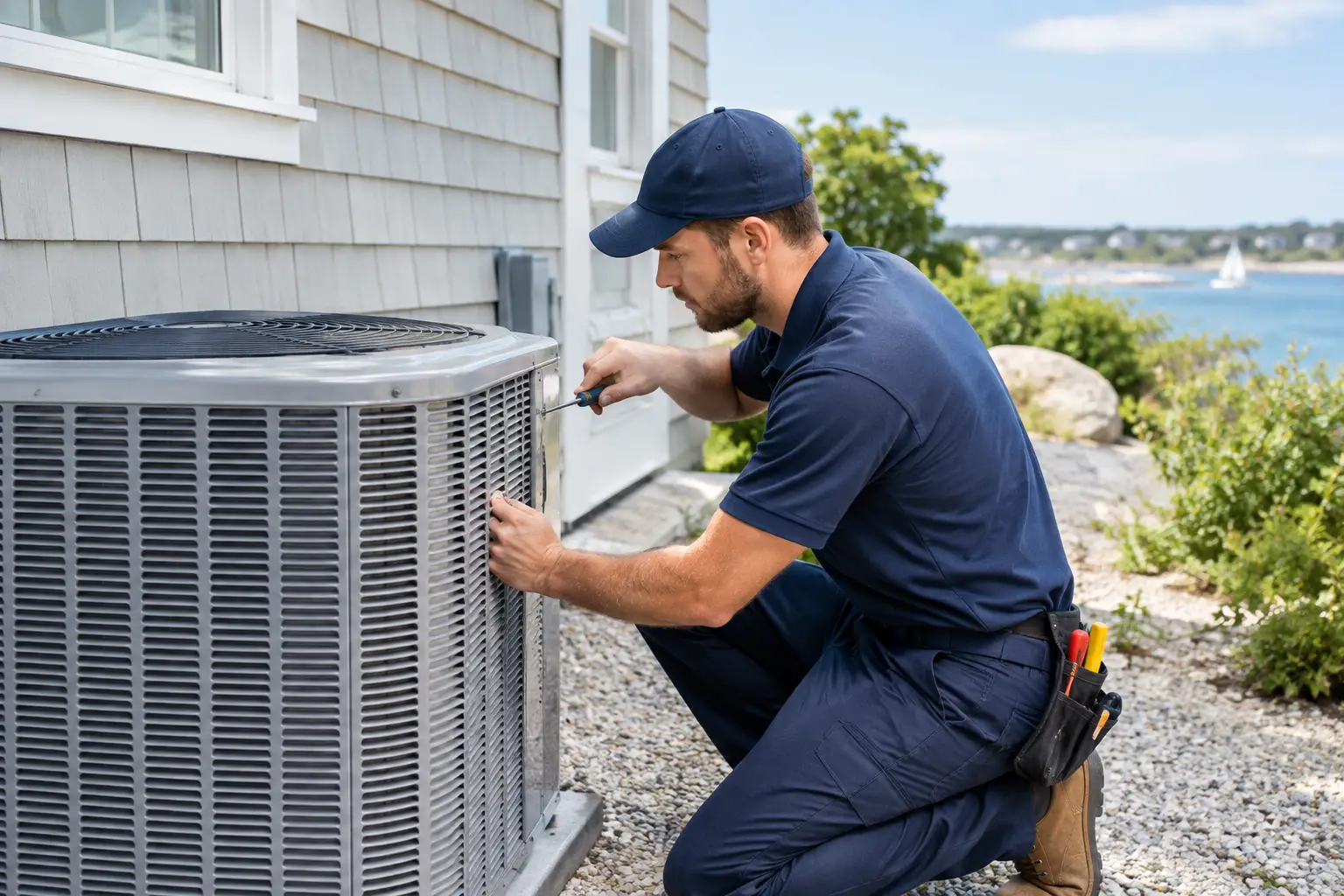
Cape Cod HVAC equipment works harder than many homeowners realize. Summer humidity, salt air, windblown debris, winter cold snaps, and long stretches of vacancy in seasonal homes can all affect performance. An HVAC maintenance plan in Cape Cod gives your heating and cooling system scheduled professional attention before a small issue becomes an inconvenient breakdown.
For homeowners, property managers, and business owners, the value is straightforward: better reliability, more consistent comfort, and fewer surprise repair decisions when the weather is at its worst. Maintenance cannot prevent every repair, especially on aging equipment, but it is one of the most practical ways to protect a major investment.
Why Cape Cod HVAC Systems Need Regular Care
Heating and cooling systems operate in a coastal environment that is tough on equipment. Salt in the air can speed up corrosion on outdoor components. Sand, leaves, pollen, and other debris can restrict airflow around condensers and heat pump units. Humidity can also place extra demand on air conditioning and heat pump systems during the summer.
Then winter arrives. A furnace, boiler, or heat pump that seemed fine at the end of the previous season may show its weakness during the first sustained cold spell. Dirty filters, loose electrical connections, worn components, drainage issues, and airflow problems often develop gradually. A scheduled visit creates an opportunity to identify those concerns before they affect heat, comfort, or safety.
This matters even more for second homes and rental properties. A system failure in an unoccupied house can lead to more than an uncomfortable building. In freezing weather, it can raise the risk of frozen pipes and costly water damage. Regular HVAC care works well alongside plumbing winterization for owners who are away from the Cape for part of the year.
What an HVAC Maintenance Plan Should Include
A worthwhile plan is more than a quick look at the thermostat. The exact checklist depends on whether you have central air, a ductless mini split, a heat pump, a furnace, a boiler, or a combination of systems. Still, a professional seasonal service visit should focus on the parts that affect safety, efficiency, and dependable operation.
Heating-System Service
Before the heating season, a technician should inspect the system’s overall operation, controls, electrical connections, and accessible components. For gas-fired equipment, this includes checking combustion-related performance and safety controls as appropriate for the system. The technician should also inspect filters, airflow, venting where applicable, and signs of wear that could lead to a no-heat call later.
A boiler visit may include checking system pressure, circulator operation, valves, and visible piping connections. A furnace visit will focus more heavily on the blower, ignition components, burners, and air delivery. The goal is not simply to make the unit run that day. It is to catch conditions that could reduce efficiency or cause an interruption when you need heat most.
Cooling and Heat Pump Service
For air conditioners and heat pumps, maintenance generally includes checking refrigerant-related performance, electrical components, condensate drainage, indoor and outdoor coils, and the condition of the outdoor unit. A blocked condensate drain can cause water damage or system shutdowns. Dirty coils and restricted airflow can make a unit run longer, cool less effectively, and put added strain on parts.
Heat pumps deserve attention before both major seasons because they provide heating and cooling. If your heat pump is also paired with a backup heating source, the controls and changeover operation should be checked so the system responds properly as temperatures change.
Airflow, Filtration, and Thermostat Checks
Comfort problems are not always caused by the equipment itself. A clogged filter, closed register, damaged duct, or poorly programmed thermostat can create hot and cold rooms, weak airflow, and higher energy use. During maintenance, these basics should be reviewed so you have a clearer picture of how the full system is performing.
Duct cleaning is not required at every maintenance visit. However, it may be worth discussing if there is visible dust buildup, post-renovation debris, unusual odors, reduced airflow, or concerns about indoor air quality. The right service depends on the condition of the home and system, not a one-size-fits-all schedule.
How Often Should HVAC Maintenance Be Scheduled?
Most Cape Cod homes benefit from two planned checkups each year: one before the heating season and one before the cooling season. This schedule is especially useful for heat pumps, ductless mini splits, and homes that rely heavily on air conditioning during humid weather.
A property with a newer, lightly used system may have fewer concerns than an older home with multiple zones, long duct runs, or equipment nearing the end of its expected service life. Even so, annual professional maintenance is a sensible minimum for most systems. Commercial spaces, rental properties, and buildings with heavier use may need more frequent attention.
Between visits, homeowners can support the system by replacing or cleaning filters on the schedule recommended for the equipment and filter type. Keeping outdoor units clear of leaves, snow, mulch, and stored items also helps maintain airflow. If you notice a new sound, short cycling, water around the equipment, uneven temperatures, or an unexplained jump in utility costs, it is better to schedule service early than wait for the next planned visit.
Maintenance Plans and Repair Coverage Are Not the Same
Before enrolling, ask what the HVAC maintenance plan includes and what it does not. Routine tune-ups, inspection, cleaning of accessible components, and priority scheduling are common plan features. Repairs, replacement parts, refrigerant, emergency service, and major equipment replacement may be separate costs.
That distinction is not a drawback. It allows you to understand what routine care provides while making informed decisions if a repair is found. A good contractor should explain the issue clearly, show you the available options, and let you know when repair makes sense versus when replacement may be the better long-term choice.
For example, replacing a minor electrical component on a well-maintained system can be a practical repair. Repeated repairs on an older unit with declining efficiency may point toward a replacement discussion. Available financing and applicable Mass Save rebates can make that conversation more manageable for qualifying upgrades, particularly when moving to efficient heat pump equipment.
Choosing an HVAC Maintenance Plan on Cape Cod
Look for a company that services the type of equipment you own and can respond when maintenance reveals a problem. A plan has more value when the provider can handle repairs, replacement options, ductless systems, heat pumps, and related plumbing concerns without sending you back to square one.
Licensed, certified technicians matter because modern HVAC systems combine mechanical components, refrigerant circuits, electrical controls, and sometimes gas connections. Ask whether the company offers emergency availability, carries common repair parts, and provides clear warranty information. These details become very important if a small issue discovered during a tune-up turns into an urgent repair.
For property managers, consistency is equally valuable. Documented visits, clear recommendations, and scheduled seasonal service can make it easier to plan budgets, communicate with tenants, and reduce unexpected disruptions. For a homeowner, the same structure means less guesswork and fewer last-minute calls when the first hot or cold week of the season arrives.
Get Ahead of the Next Weather Shift
The best time to schedule maintenance is before you are relying on the system every day. Durfee Plumbing & Heating can help Cape Cod homeowners and property managers keep heating, cooling, heat pump, and ductless equipment ready for the season ahead. A planned visit gives you time to address concerns on your schedule, rather than during a no-heat or no-cooling emergency.
If your system has been noisy, uneven, slow to respond, or overdue for service, do not wait for the next weather shift to force the issue. A professional inspection now can provide the answers you need to plan confidently.



