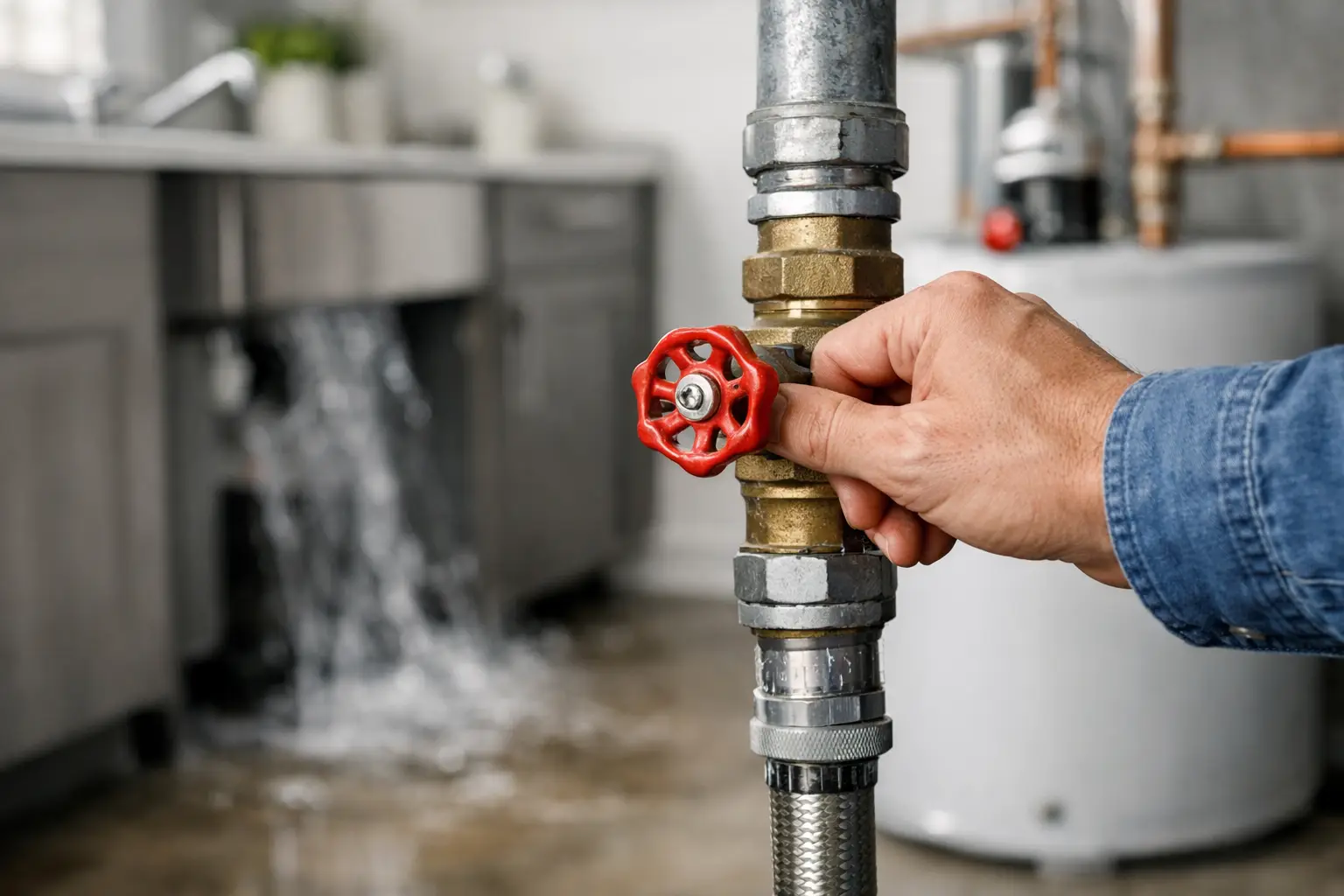
A burst supply line can release gallons of water in minutes, turning a manageable repair into damaged flooring, ceilings, insulation, and personal belongings. Knowing how to shut off water in an emergency gives you time to protect your property and get the right help on the way.
The goal is simple: stop the water source first, then address the repair. Do not spend valuable minutes trying to identify exactly why a pipe failed while water is still flowing. If there is active flooding, shut off the closest valve you can reach safely. If that is not possible, turn off the main water supply to the building.
How to Shut Off Water During an Emergency
Start by taking a quick look at where the leak is coming from. A leaking toilet, sink, washing machine, refrigerator line, or water heater often has a local shutoff valve. Turning off that one valve keeps water available to the rest of the home or business.
If water is coming through a ceiling, spraying from a wall, pouring from a pipe, or spreading quickly across the floor, go straight to the main shutoff valve. This stops incoming water to most fixtures throughout the property.
Avoid stepping into standing water near electrical outlets, extension cords, appliances, electrical panels, or heating equipment. If water is near electricity, do not touch the water or attempt a repair. Leave the area and call for emergency assistance. A plumbing leak can become an electrical hazard quickly.
Shut off the local fixture valve when possible
Most plumbing fixtures have their own shutoff valve. These are usually small oval, round, or lever-style handles located on the water supply line.
For toilets, look behind the toilet near the floor. For sinks, open the cabinet below the basin and look for valves on the hot and cold supply lines. Washing machine valves are commonly located in a recessed box behind the machine. Refrigerators with ice makers may have a small valve beneath the kitchen sink, behind the refrigerator, or in a nearby basement ceiling.
Turn a round handle clockwise until it stops. For a lever handle, turn it a quarter turn so it is perpendicular to the pipe. Do not force a corroded valve. Older valves can break or begin leaking when they are moved, especially in seasonal Cape Cod properties where plumbing may sit unused for periods of time.
If the local valve shuts off the flow, open the affected faucet or flush the toilet once to relieve pressure. Then place a bucket or towels beneath the leak and arrange for repair. A fixture valve is useful for containing a problem, but it does not fix a failed supply line, worn toilet fill valve, or leaking appliance connection.
Find and close the main water shutoff valve
Every property owner, tenant, and property manager should know where the main water shutoff is before an emergency happens. In many homes, it is located where the water service line enters the building. Check near the water meter, in the basement, utility room, crawl space, garage, or mechanical closet.
On Cape Cod, the valve may be near a basement foundation wall, beside a water meter, or close to well equipment. Homes served by private wells may have an additional valve near the pressure tank. Commercial buildings can have more than one service line or separate shutoffs for different areas, so building staff should identify and label these in advance.
The main valve may be a round gate-style wheel or a lever-style ball valve. Turn a wheel clockwise several times to close it. Turn a ball-valve handle one quarter turn until it sits across the pipe. Once the valve is closed, test a cold-water faucet at the lowest practical point in the building. Water should stop after the remaining water in the pipes drains out.
Some homes have a curb shutoff near the street or property line. This is generally for water utility access and may require a special key. Do not try to dig for it or force it open or closed during an indoor emergency. Use the indoor main shutoff and contact a licensed plumber or your water provider if the indoor valve will not work.
What to Do Immediately After the Water Is Off
Stopping the flow is the priority, but the next few minutes matter. Move furniture, rugs, boxes, electronics, and valuables away from wet areas if it is safe to do so. Use towels, mops, or a wet/dry vacuum to remove water from hard surfaces. The faster moisture is removed, the less likely it is that flooring, cabinets, or drywall will absorb it.
Take photos of the leak, the damaged area, and any affected belongings before extensive cleanup. This can help with insurance documentation and gives your plumber useful information about what happened.
If a ceiling is bulging with water, stay out from underneath it. A water-filled ceiling can collapse without warning. Turn off the main water, move people and belongings out of the area, and call for emergency plumbing service. Do not puncture the ceiling unless a qualified professional advises you to do so.
If the leak came from a drain or sewer line rather than a clean water pipe, keep people and pets away from the contaminated area. Do not use nearby sinks, toilets, showers, dishwashers, or washing machines until the drain problem has been evaluated.
Special Situations That Need Extra Care
A leaking water heater calls for a slightly different response. If water is leaking from the tank, close the cold-water supply valve above the heater. For an electric water heater, turn off power at the breaker before the tank runs dry or before anyone works on it. For a gas water heater, avoid adjusting gas controls if you smell gas or suspect a gas leak. Leave the area and contact the gas utility or emergency services first.
A frozen pipe may not be leaking yet, but it can rupture as it thaws. Shut off the main water if you see a frozen pipe that is bulging, cracked, or already dripping. Never use an open flame to thaw plumbing. A hair dryer on a low setting may be appropriate for an accessible, lightly frozen pipe, but only if the area is dry and there are no damaged wires or signs of a break. When in doubt, call a licensed plumber.
For an overflowing toilet, close the valve behind the toilet immediately. If the valve does not work, remove the tank lid and lift the float to stop water from entering the tank, then shut off the main water if necessary. This is a temporary measure, not a repair.
When a Shutoff Valve Will Not Close
A valve that will not turn, leaks around the handle, or fails to stop the water is a common issue in older homes. Do not use excessive force with pliers or a wrench. Breaking the valve can make the emergency worse.
If the local valve fails, use the main shutoff. If the main valve is seized, damaged, or inaccessible, call for emergency plumbing help right away. A licensed technician can isolate the water, repair or replace the failed valve, and identify the underlying issue. For Cape Cod homeowners and property managers, Durfee Plumbing & Heating provides 24/7 emergency plumbing response with stocked trucks to help limit water damage and restore service quickly.
Prepare Before the Next Plumbing Emergency
The best time to find your shutoff valve is when nothing is leaking. Walk through the property, locate the main valve and major fixture valves, and make sure responsible family members, tenants, or staff know where they are. Labeling the main shutoff can save critical time during a late-night emergency.
Test accessible shutoff valves carefully once or twice a year, especially before leaving a seasonal home vacant. If a valve is stiff, corroded, or leaking, schedule replacement before it becomes an emergency. Consider replacing older multi-turn valves with quarter-turn ball valves, which are generally easier to operate and more reliable.
Keep a basic response kit nearby with towels, a bucket, a flashlight, and the contact information for a trusted emergency plumber. Water damage moves fast, but a calm response and a working shutoff valve can keep a plumbing failure from becoming a much larger disruption.