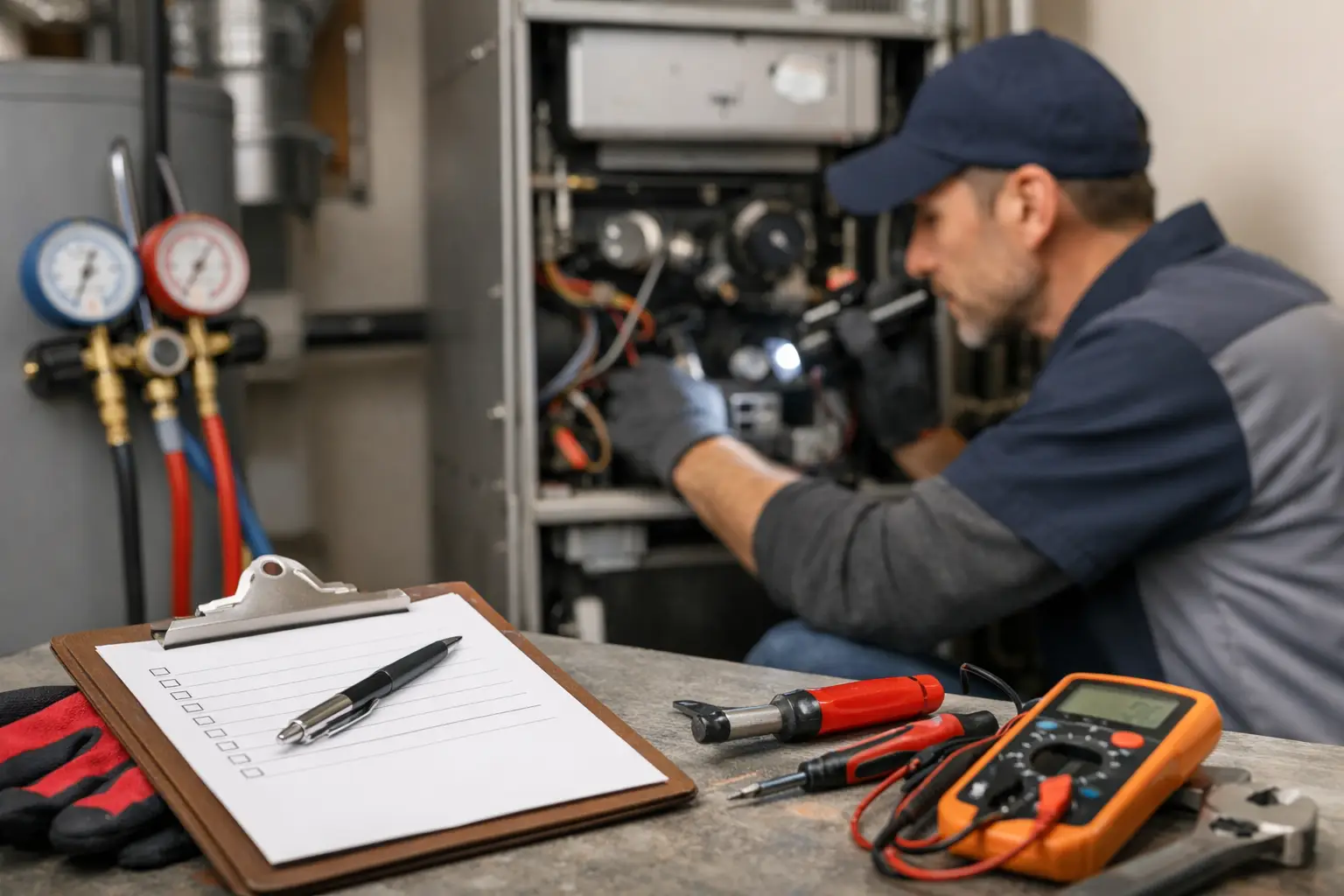
When the heat cuts out on a cold night, the first few minutes matter. A good emergency heating repair checklist helps you protect your home, rule out simple problems, and decide quickly whether it is safe to stay put or time to call for service.
Start with safety before troubleshooting
If you smell gas, hear loud banging from the furnace, see smoke, or notice signs of carbon monoxide exposure like headaches, dizziness, or nausea, stop troubleshooting right away. Leave the building, shut off the gas only if you know how to do it safely, and call for emergency help from outside.
For electric systems, burning smells, tripped breakers that will not reset, or visible wiring damage should also be treated as urgent. Heating equipment is not a place for guesswork when there is a fire, gas, or air quality risk.
If there is no immediate danger, keep everyone warm with layers, blankets, and safe portable heat sources used exactly as directed. That buys you time to work through the next checks without rushing.
Emergency heating repair checklist for homeowners
Most no-heat calls come down to a handful of issues. Before assuming the system has failed completely, go through the basics in order.
Check the thermostat
Make sure the thermostat is set to Heat, not Cool or Off. Raise the set temperature at least five degrees above the current room temperature and listen for the system to respond.
If the screen is blank, replace the batteries if your model uses them. If the display is active but the system does not turn on, double-check that no programmed schedule is overriding your manual setting.
Smart thermostats can also lose connection or settings after a power interruption. If that happened during a storm or outage, restarting the thermostat may restore operation.
Check power to the heating system
Go to the electrical panel and look for a tripped breaker. Reset it once. If it trips again, stop there and call a licensed technician. Repeated tripping usually points to an electrical fault, not a one-time glitch.
Next, check the furnace service switch. It often looks like a regular light switch mounted near the unit and can get turned off by accident. If the switch is off, restore power and see whether the system starts normally.
For boilers and some air handlers, low-voltage issues, blown fuses, or control board faults may still prevent startup. At that point, professional diagnosis is the safer path.
Check the air filter
A clogged filter can choke airflow enough to overheat a furnace and trigger a safety shutdown. Slide the filter out and inspect it. If it is packed with dust or looks gray and matted, replace it with the correct size and rating.
This is one of the most common preventable issues, especially during heavy winter use. If the system starts after a filter change, you may have solved the immediate problem, but it is worth watching for short cycling or weak airflow afterward.
Check fuel supply
If you have an oil, propane, or gas heating system, confirm the fuel source is available. That may mean checking the tank gauge, confirming the gas valve is open, or looking for a notice from the utility.
A system that suddenly stops after running normally may simply be out of fuel. But if fuel is available and the burner still will not ignite, do not keep restarting it over and over. That can make diagnosis harder and, in some cases, less safe.
Check vents, registers, and intake/exhaust pipes
Walk through the home and make sure supply registers and return vents are not blocked by rugs, furniture, or storage. Restricted airflow can stress the system and lead to uneven heating.
For high-efficiency furnaces, check the exterior intake and exhaust pipes if they are accessible. On Cape Cod, snow, ice, windblown debris, or salt-heavy winter weather can block venting and shut the system down. Clear visible obstructions carefully, but do not take apart piping or force anything loose.
Check the condensate line if you have a high-efficiency unit
Some modern furnaces shut off when the condensate drain backs up. If you know where the drain line and overflow safety switch are located, look for obvious standing water around the unit.
This is a situation where a homeowner can identify the symptom, but repair is often better left to a technician. A clogged trap, frozen line, or drainage issue can come back if the root cause is not corrected.
Signs the problem is serious
Some heating problems are inconvenient. Others can damage equipment or create a safety issue if ignored.
Call for immediate professional service if the system starts and stops every few minutes, blows cold air continuously, makes grinding or screeching noises, leaks water around a boiler or furnace, or shows a burner flame that looks yellow instead of steady blue on a gas furnace. Soot, scorch marks, repeated lockouts, and rooms that stay cold even when the system runs nonstop also point to a larger problem.
If your heat pump is not keeping up, the issue may be with defrost controls, refrigerant levels, airflow, or backup heat. It depends on outdoor temperature and the age of the system, but a heat pump that suddenly cannot maintain a reasonable indoor temperature deserves attention before pipes are at risk.
What not to do during a heating emergency
The wrong fix can turn a manageable repair into a bigger one. Avoid opening sealed burner compartments, bypassing safety switches, forcing stuck parts, or repeatedly cycling the system in hopes it will catch.
Do not use ovens or gas ranges to heat the house. Do not run unvented equipment in enclosed spaces. And do not ignore moisture around the system, especially near boilers, because a small leak can become a larger mechanical or water damage issue fast.
Portable heaters can help temporarily, but only when used with clear space around them and plugged directly into a wall outlet. Extension cords and space heaters are a bad mix.
What to have ready when you call
A faster service call usually starts with better information. Before you call or text for help, note the thermostat setting, the equipment type, the make and model if visible, and any error codes or flashing lights on the unit.
It also helps to describe what changed. Did the system stop after a storm, after making a new noise, or after a recent filter change? Is the whole building without heat, or only one zone? Those details can help a technician arrive prepared, which matters during an after-hours emergency.
For homes and commercial properties in coastal Massachusetts, it is also smart to mention if the building is vacant, if pipes may be exposed to freezing, or if elderly residents, tenants, or critical operations are affected. Urgency is not just about the equipment. It is about the people and property depending on it.
After the immediate repair, prevent the next no-heat call
Emergency service gets the heat back on. Good maintenance reduces the chance that you will need that call again next month.
Replace filters on schedule, keep outdoor equipment clear, and pay attention to early warning signs like rising utility bills, uneven heating, delayed ignition, or louder operation than usual. Annual heating maintenance is especially valuable for older systems and seasonal properties, where issues can develop quietly between visits.
For many property owners, the real trade-off is repair versus replacement. If your system is aging, breaking down often, or facing a major repair, it may make more sense to invest in new equipment rather than keep paying for emergency fixes. That decision depends on system condition, repair history, energy costs, and budget. A trustworthy contractor should be able to explain both options clearly.
In Cape Cod homes, where winter weather and salt air can both take a toll on equipment, being proactive matters. A stocked, licensed heating team can often solve the immediate problem on the first visit, but the best outcome is avoiding the emergency in the first place.
If your system is down and temperatures are dropping, use this emergency heating repair checklist to cover the basics, then get expert help when the issue goes beyond a simple reset or filter change. Fast action protects your comfort, your equipment, and your home.